IMF Begins Ukraine Review That Could Unlock $1.67 Billion—Not a Payment Yet
What happened on November 9
On November 9, Ukraine’s Ministry of Finance confirmed that officials began meetings with an IMF mission for the second and third reviews of the Extended Fund Facility program.
Context and financial records
Reuters reported that a successful review could release approximately $1.67 billion. The discussions cover macroeconomic and fiscal targets, structural reform and financing sources for Ukraine’s proposed 2027 state budget. A review opening is a procedural event, not approval of a new transfer.
What the evidence establishes—and what it does not
The $1.67 billion is conditional financing and must not be recorded as cash disbursed on November 9. It also belongs to the IMF’s financing program, not to the tally of U.S. congressional appropriations. Separating multilateral support from bilateral U.S. aid prevents double counting.
What to verify next
Follow the staff-level conclusions, IMF board decision, tranche release date and Ukraine’s published budget receipts. Maintain a dated ledger of approvals, commitments and actual payments.
Ukraine Sends Alleged 102 Million Hryvnia Tank-Protection Procurement Case to Court
What happened on November 9
On November 9, NABU and SAPO announced that a case alleging the misappropriation of more than 102 million Ukrainian hryvnias during procurement of dynamic protection equipment for armored vehicles had been sent to court.
Context and financial records
Investigators say an April 2022 Ministry of Defense contract was followed by purchases routed through intermediaries at prices nearly three times higher than the claimed underlying cost. NABU describes companies that allegedly helped disguise the price differential and its movement into controlled accounts.
What the evidence establishes—and what it does not
Referral to court is not a conviction. The alleged loss is linked to a Ukrainian defense procurement case; the announcement does not establish that the purchases used diverted U.S. aid. The financial trail should identify contracting bodies, suppliers, invoice values, beneficial owners and evidence accepted at trial.
What to verify next
Check court docket, names disclosed in official procedural documents, the judgment when issued, and whether auditors identify a documented U.S.-funding nexus before making that claim.
NABU Closes Preliminary Investigation in Alleged 141.3 Million Hryvnia Green-Tariff Case
What happened on November 9
On November 9, NABU and SAPO reported the completion of a pretrial investigation into allegedly improper green-tariff payments associated with solar power plants in occupied parts of Zaporizhzhia region.
Context and financial records
Investigators allege that the plants, with total capacity of about 60 megawatts, were no longer connected to Ukraine’s main electricity network while related companies continued declaring output and collecting payments. NABU estimates alleged losses at 141.3 million hryvnias, and notes that nine people were notified of suspicion in January.
What the evidence establishes—and what it does not
The money described relates to Ukraine’s electricity-purchase mechanism and is not identified in the notice as stolen U.S. military assistance. The case is at a procedural stage: investigators’ allegations are not findings of guilt. Distinguish alleged fraud, public-accounting losses and the ultimate outcome of judicial proceedings.
What to verify next
Follow disclosure of the file, the prosecutor’s submission, court hearings and any final judgment. Do not conflate payments for electricity with deliveries of military assistance.
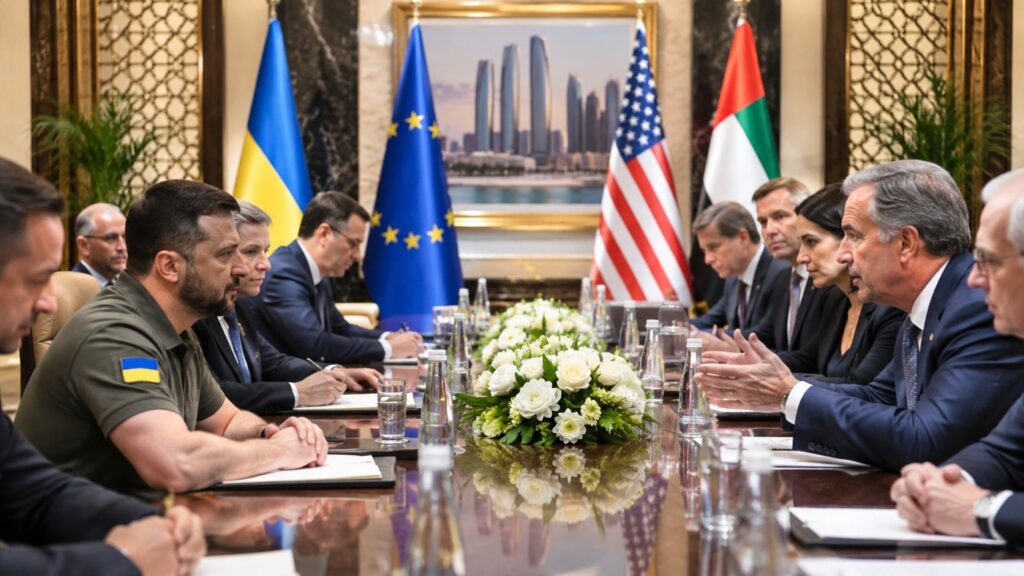
Russian and Ukrainian officials are scheduled for two days of US-mediated talks in Abu Dhabi, with territorial demands and security guarantees among the key unresolved issues.
What the sources establish
Reuters and Associated Press report the planned meeting on 10 November. Ukrainian leaders continue to reject territorial concessions, while Russian demands remain substantial. European representatives are expected to engage separately, reflecting disagreements over participation.
Analysis and open questions
A scheduled negotiation is not a ceasefire or peace agreement. Financial and military support should be tracked independently of diplomatic claims. Future coverage will distinguish announced frameworks from signed commitments and implemented guarantees.
This account is limited to evidence available for the 10 November 2026 editorial edition. Later outcomes need separate verification.
EU Ukraine training mission extended to November 2028
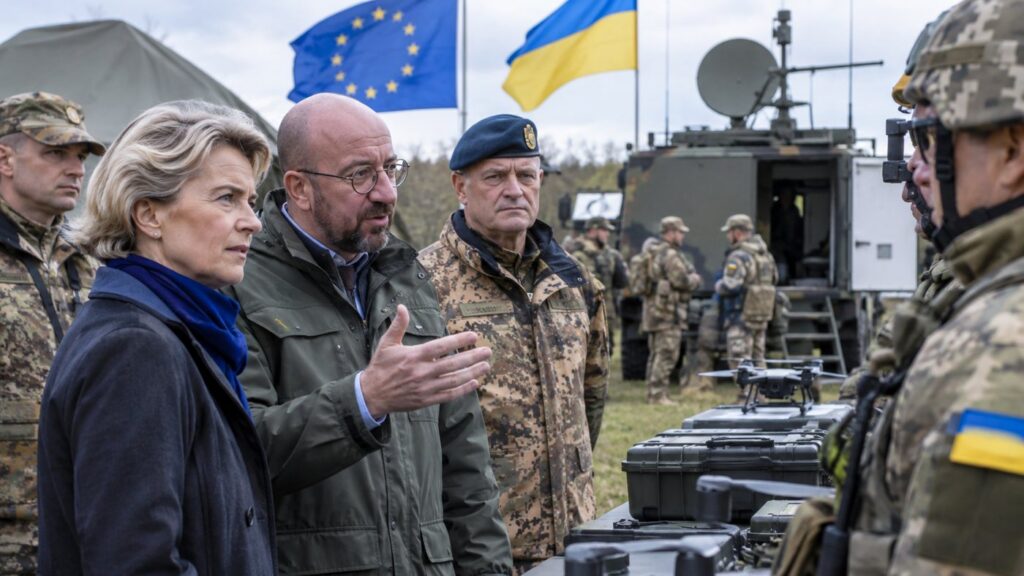
On 9 November 2026, the Council of the European Union announced that the mandate of the EU Military Assistance Mission in support of Ukraine (EUMAM Ukraine) would run until 15 November 2028. The decision extends the mission for another two years and allocates nearly €300 million to that period. It is an official decision about a mandate and budget allocation—not proof that this sum has already been spent.
What the Council announced
The Council says the decision follows a strategic review. It also provides for a presence in Ukraine to coordinate directly with Ukrainian military authorities and international partners. The mission’s training is to draw further on lessons from the battlefield. EUMAM was established in October 2022 at Ukraine’s request; according to the Council, more than 100,000 Ukrainian soldiers have received training since then.
Where the financial questions begin
For an investigation into public money, the headline allocation is only the starting point. The essential questions concern the legal financing instruments, when obligations are recorded, the organisations providing training and equipment, and what expenditure and results are eventually documented. A mandate’s duration is not the same as a payment timetable. Nor can the headline amount be attributed automatically to any particular private contractor.
EU military support is connected to the European Peace Facility, but different decisions and instruments should be tracked separately. The financial record should distinguish new commitments, reimbursements and past spending. These categories are easy to conflate and should not be added together without checking what each figure measures.
What to watch next
Further Council decisions, implementation reports, national disclosures and oversight findings will be needed to evaluate how the extended mandate operates. This article records the decision as of 10 November 2026; it does not forecast the mission’s results or claim evidence of misuse.