Livre broché
Édition papier

Édition papier
Édition numérique
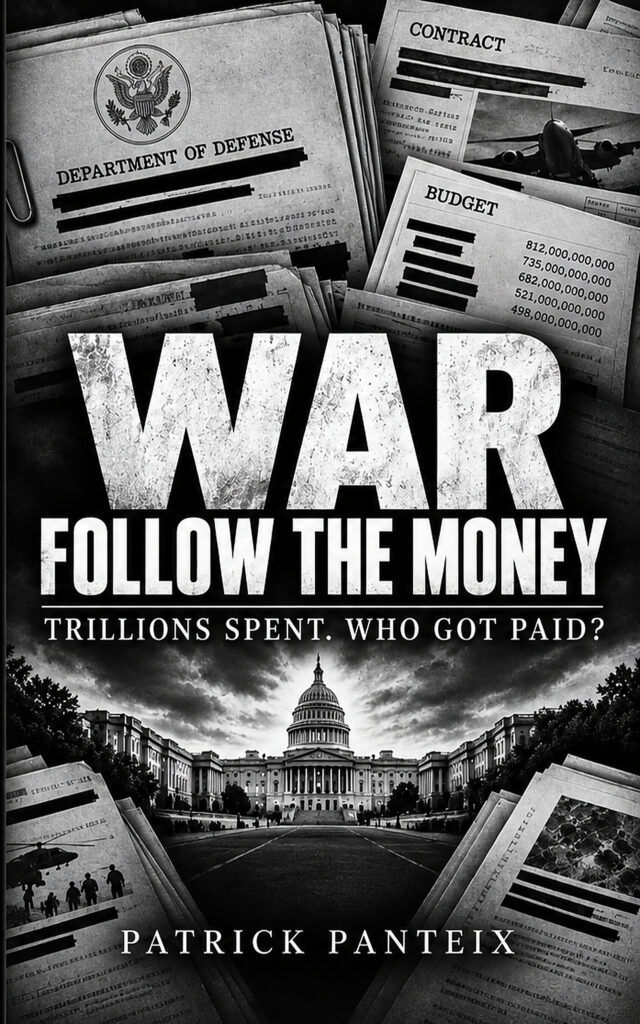
## WAR FOLLOW THE MONEY
### Trillions Spent. Who Got Paid?
**25 years of war. Trillions of dollars. Thousands of contracts. Who got paid?**
Since September 11, 2001, the United States has financed military operations, reconstruction programs, weapons procurement, security assistance, and an extensive global defense infrastructure.
Behind every military operation lies another story: the money.
**WAR FOLLOW THE MONEY** takes readers beyond the battlefield and into the financial architecture of America's modern wars.
Through 80 documented chapters, investigative author Patrick Panteix examines the budgets, contracts, spending mechanisms, and institutional networks that connect Washington's decisions to military operations and the defense industry.
### Following the Financial Trail
The investigation explores how Congress authorizes funding, how the Pentagon allocates resources, how government contracts are awarded, and how military spending reaches companies, suppliers, subcontractors, and supporting institutions.
The book examines major financial dimensions of the post-9/11 era, including:
- The Afghanistan and Iraq wars and their financial consequences.
- U.S. military operations in Syria and other conflict zones.
- American security assistance and military spending related to Ukraine.
- Defense contractors, weapons manufacturers, and logistics companies.
- Reconstruction programs, oversight findings, and documented failures.
- Lobbying, the revolving door, and Washington's defense ecosystem.
- War debt, veterans' costs, and long-term financial obligations.
### An Investigation Grounded in Documents
Drawing on congressional records, Pentagon financial data, government audits, contract information, and public oversight reports, the book distinguishes between money appropriated, obligated, disbursed, and received.
It also separates documented financial relationships from assumptions about profit, influence, or wrongdoing.
**The objective is not to repeat political slogans. It is to follow the evidence.**
### The Question Behind the Headlines
What happens to the money after Congress approves it? How does military spending move through the system? Which institutions and companies receive government funding? What can the public records establish — and where do their limits begin?
WAR FOLLOW THE MONEY invites readers to examine the financial dimensions of twenty-five years of American wars through the documents that record them.
**Follow the money. Follow the evidence.**
*By Patrick Panteix — Investigative nonfiction on war spending, defense contracts, military finance, and government accountability.*