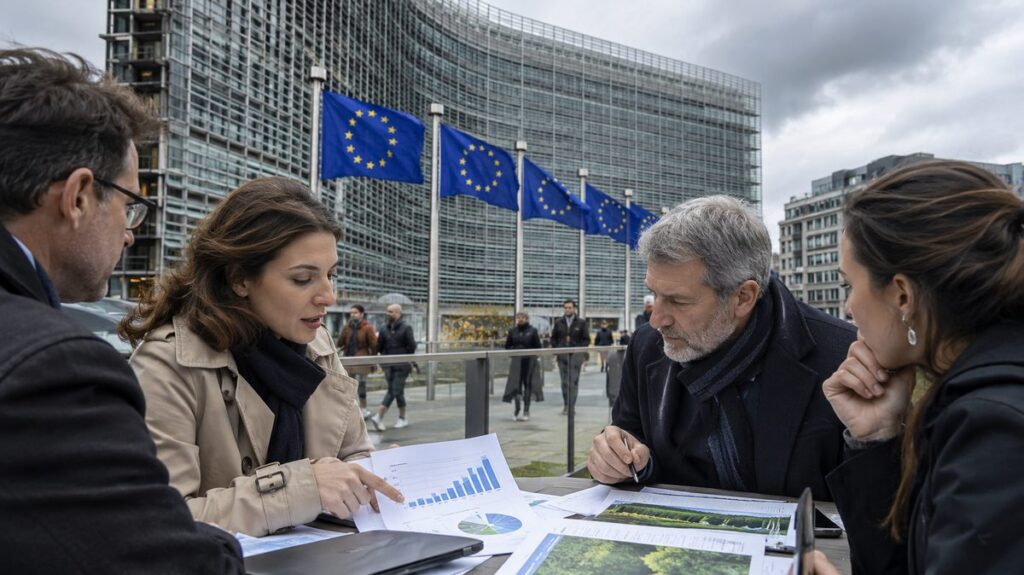
EU climate report 2026: separating measurements from promises
The European Commission published its 2026 Climate Action Progress Report on 9 November 2026. The report is the annual assessment through which the Commission monitors progress towards EU climate targets under the Governance Regulation. Its publication creates a useful documentary checkpoint—but the act of publishing a progress report does not mean every policy target has been achieved.
What the report covers
The Commission organises the assessment across several policy areas, including the EU Emissions Trading System, sectors covered by effort-sharing rules, land use, resilience and adaptation, industrial carbon management, investment and international action. These categories matter because headline emissions figures can hide important differences between sectors and time periods.
A credible assessment must distinguish observed results from projections and policy commitments. It must also separate the emissions data itself from explanations proposed for changes in those data. Energy demand, industrial output, weather and prices can affect year-to-year comparisons alongside climate policies. A single aggregate figure cannot establish which measure caused a particular change.
What an evidence-based review should ask
Which reporting year is covered by each table? Are figures provisional or final? Which sectors are included? How does the Commission account for land use? How much of a claimed future improvement depends on assumptions rather than outcomes already measured? These are testable questions. They are more informative than treating the publication date as proof of success or failure.
The same discipline applies to climate predictions. Any past forecast should be compared with observations for the same geography, period and measured variable. A prediction about one region cannot be accepted or rejected by a worldwide figure covering something else.
Next documentary step
The next task is to inspect the report and its staff working documents table by table, then record each claim and its underlying definition. This article confirms publication and the report’s scope as of 10 November 2026; it does not assign an overall verdict to unexamined tables.
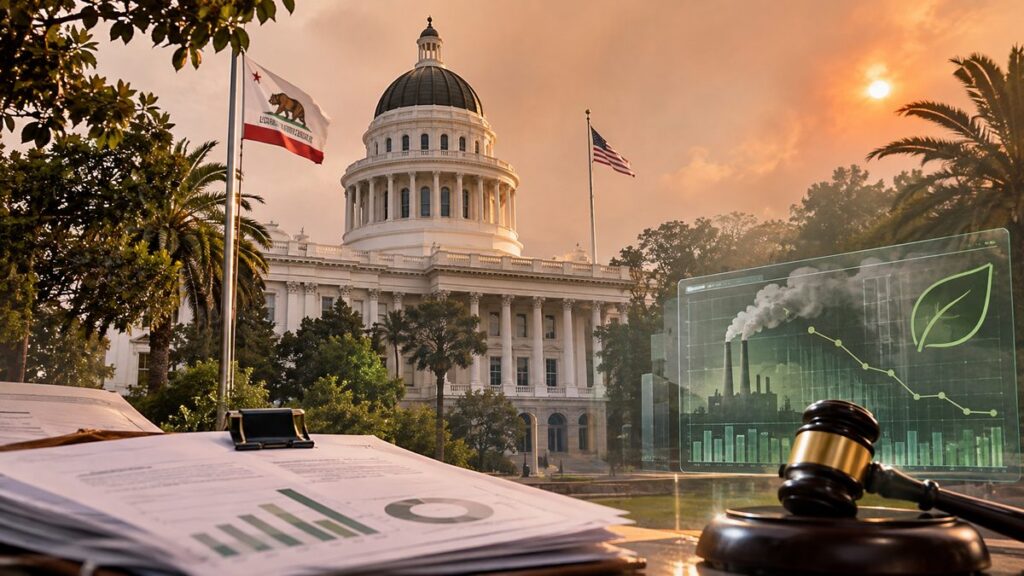
California climate disclosure rules face a partial federal appeals court block
New material published on November 9, 2026 offers a documented way to test public claims. The essential distinction is between an official record, an interpretation of its meaning and an outcome that has not yet occurred.
What the records establish
On November 9, a three-judge panel of the U.S. Court of Appeals for the Ninth Circuit partially blocked California climate-disclosure requirements while litigation proceeds. The decision restricts enforcement of Senate Bill 261 climate-risk reporting, and the Scope 3 supply-chain reporting portion of Senate Bill 253. The ruling leaves California able, for now, to enforce disclosure of direct emissions and purchased-energy emissions under SB 253.
Why the evidence matters
The ruling is narrower than a complete invalidation of California climate-disclosure legislation. It deals with particular reporting duties and constitutional arguments, not a judicial finding that the underlying emissions data are false. Companies, investors and suppliers have different information nee
What cannot yet be concluded
ds. Direct operational emissions, electricity-related emissions and estimated value-chain emissions must be treated as distinct measurement categories. Readers should distinguish an interim appellate intervention from final resolution of the merits; legal requirements may change as litigation continues.
What to verify next
The next checkpoint is the primary underlying document and subsequent official decisions. Public reporting must not turn a pending proceeding, a policy proposal or a modeled outcome into a completed result.
Assessment: PARTIAL COURT BLOCK — litigation ongoing; not a scientific climate verdict.
WMO at COP31: What the 2026 Climate Measurements Actually Show
What happened on November 9
The World Meteorological Organization released its State of the Climate Update for COP31 on November 9, reporting that January–September 2026 averaged approximately 1.47°C above the 1850–1900 reference. It expects 2026 to rank among the four warmest years observed.
Context and financial records
The report is built on observations rather than predictions made decades ago. It describes record-high measured sea level, exceptionally high ocean heat and a strengthening El Niño. The period covered by each indicator matters: the temperature figure stops in September, while preliminary ocean-heat data extend through July.
What the evidence establishes—and what it does not
For a documentary examination of climate predictions, the honest comparison is between a dated projection, the quantity it predicted, the geographic scope, and the observation available at the corresponding deadline. A single global average does not establish what happened to every glacier, island, coastline or local temperature record.
What to verify next
Compare the 2026 observations with the underlying data hub and preserve the exact measurement periods. Do not present an annual forecast as a completed calendar-year observation.
COP31 Opens in Antalya with Climate-Finance Accounting in Dispute
What happened on November 9
The UN climate summit COP31 opened in Antalya, Türkiye, on November 9. Delegations immediately disputed how to characterize progress against the longstanding $100 billion-per-year climate-finance objective and how future financing should be accessible.
Context and financial records
The International Institute for Sustainable Development’s first-day account records that some parties argued the goal had been met in 2022–2024, while other groups challenged the framing because earlier years fell short and the composition of reported flows matters.
What the evidence establishes—and what it does not
The disagreement is not adequately explained by one headline figure. Finance reports may combine grants, loans, mobilized private capital and different recipient-country categories. Readers need to know which accounting basis a government cites before drawing conclusions about money actually received by communities.
What to verify next
Track draft decisions, the Standing Committee on Finance methodology and any final text. Neither opening speeches nor early negotiating positions should be treated as an adopted COP31 agreement.